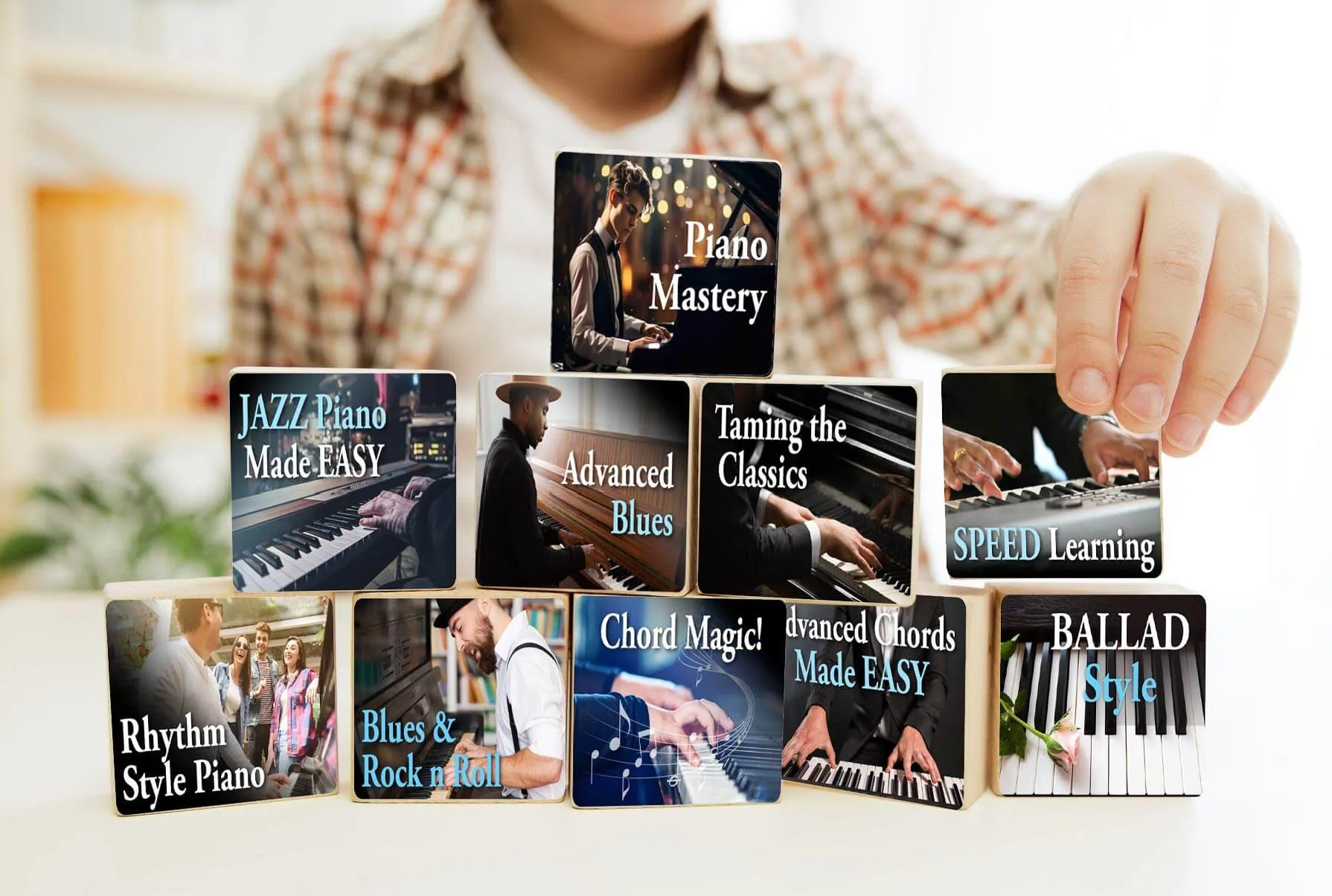
Pianoforall Review At A Glance
| Decision Factor | Our Assessment |
|---|---|
| Learning Format | Best suited to independent learners |
| Flexibility | High |
| Need For Self-Discipline | High |
| Personal Feedback | Limited compared with a private teacher |
| Best Starting Point | Learners who prefer structured self-study |
| Practice Environment | Particularly suitable for home learning |
| Learning Variety | Broad |
| Main Consideration | Progress depends heavily on consistent practice |
| Current Official Price | $49 one-time payment at the time checked |
| Money-Back Period | 60 days according to the official order page |
| Overall Fit | Stronger for self-paced learners than learners seeking constant coaching |
What We Looked At In This Pianoforall Review
A useful evaluation should go beyond asking what a product contains. The more important question is whether those materials make sense for the person using them.
For Pianoforall, the biggest factor is the learning model. It is designed around independent study, which changes the experience considerably compared with sitting in front of a teacher every week.
That means the evaluation needs to consider flexibility, motivation, practice habits, learning preferences, feedback, and the amount of responsibility placed on the student.
It is also worth separating course breadth from learning effectiveness. Having a large amount of material can be useful, but only if the learner can navigate it without becoming distracted or losing momentum.
The Biggest Strength: Learning Flexibility
The strongest argument for Pianoforall is flexibility.
A learner does not have to organize every practice session around another person's availability. Someone with an unpredictable schedule can decide when to practice, pause when necessary, and return later.
That can be particularly useful for adults, busy students, parents, working professionals, and anyone whose schedule does not fit neatly into a fixed weekly lesson.
The trade-off is equally important: flexibility removes some external accountability. With a private teacher, the next lesson creates a natural deadline. With a self-paced program, the learner has to create that momentum independently.
So flexibility is both an advantage and a responsibility.
The Learning Experience Depends On Your Personality
Not everyone learns in the same way.
Some people enjoy sitting down with a structured resource, practicing alone, and repeating material until it feels comfortable. For those learners, Pianoforall's independent format can make sense.
Other people need someone watching their technique, correcting mistakes immediately, and setting the pace. A self-directed program can feel less satisfying for that type of learner.
This is one of the most important points to understand before buying Pianoforall. The question is not simply "Is Pianoforall good?" A better question is "Is this type of learning good for me?" That distinction makes the buying decision much clearer.
Where Pianoforall Can Work Well
For Learners With Busy Schedules
A flexible learning format can make piano practice easier to fit around work, school, family responsibilities, or other commitments. There is no need to coordinate every practice opportunity with an instructor's timetable.
For People Who Prefer Independent Study
Some learners genuinely enjoy figuring things out independently. They prefer having material available and deciding how quickly to move through it. For this group, the absence of constant supervision is not necessarily a weakness.
For Returning Players
Someone who has played piano before may not want to start with a highly structured teacher-led program immediately. An independent course can provide a way to rebuild a regular practice habit.
For Curious Learners
People who enjoy exploring different approaches to piano may appreciate having a broad learning environment rather than committing immediately to one narrow style of instruction.
Where Pianoforall May Feel Limited
Limited Real-Time Correction
A self-paced course cannot provide the same immediate physical and technical correction as a teacher watching you play. If your main concern is posture, fingering, hand movement, timing, or another technique that benefits from direct observation, personal instruction has an obvious advantage.
Self-Discipline Matters
The course cannot make someone practice. This sounds obvious, but it is probably the most important limitation of any self-paced learning program. Buying a course and completing a course are two very different things. Learners who regularly postpone practice may not get much value from even a well-organized program.
The Amount Of Material Can Feel Substantial
A broad piano program gives learners plenty to explore, but that can also create a feeling of having a lot ahead of them. The best approach is not to rush. Set a realistic practice routine, work on one area at a time, and measure progress by consistency rather than by how quickly you move through the material.
Pianoforall And Accountability
Accountability is an underrated part of learning music.
A private teacher naturally provides it. You have an appointment, someone expects you to practice, and your next session creates a reason to keep going. Pianoforall takes that external pressure away.
For a disciplined learner, that can be liberating. For someone who struggles to maintain routines, it can become a problem.
If you choose a self-paced course, it helps to create your own accountability system. Even something simple, such as practicing on specific days each week, can make the difference between an unused course and an active learning routine.
How Much Time Should You Expect To Give It?
There is no single practice schedule that will work for everyone. A better approach is to create a routine that you can maintain.
Twenty minutes of focused practice several times a week can be more sustainable than promising yourself long sessions that rarely happen.
The important thing is consistency. Piano involves coordination, memory, timing, listening, and repetition. Those skills develop through regular interaction with the instrument, not simply through reading about them.
So when evaluating Pianoforall, don't only ask how much content is available. Ask how much time you can realistically give to learning piano.
Pianoforall For Complete Beginners
A complete beginner should think carefully about learning preference before choosing any self-paced piano course.
If you like exploring material independently and are comfortable repeating exercises without someone monitoring every session, the format can be appealing.
If you are starting from zero and feel uncomfortable making decisions about practice, a teacher may provide more reassurance.
That does not automatically make one approach better. It simply means that beginners differ considerably in how much guidance they need. For a closer look at how the course introduces new players to the instrument, see Pianoforall for beginners.
Pianoforall For Experienced Players
An experienced pianist is unlikely to approach the course in exactly the same way as a complete beginner.
A returning or intermediate player may be more interested in specific areas rather than following everything from the beginning. That makes the self-paced nature potentially useful because the learner can concentrate more heavily on the material that matches their current interests.
The main question is whether the existing skill level matches the material being studied.
Pianoforall Vs Private Piano Lessons
| Consideration | Pianoforall | Private Teacher |
|---|---|---|
| Scheduling | Flexible | Usually Fixed |
| Learning Pace | Student Controlled | Teacher Guided |
| Personal Feedback | Limited | Direct |
| Accountability | Mostly Self-Created | Built Into Lessons |
| Home Convenience | High | Depends On Teacher |
| Personalized Curriculum | Limited | High |
| Cost Structure | One-Time Course Purchase | Usually Ongoing Lessons |
| Independence | High | Lower |
| Best For | Self-Directed Learners | Learners Wanting Coaching |
This is not a question of declaring a winner. A private teacher and a self-paced course solve different problems. Someone who wants personal correction and external accountability may prefer a teacher. Someone who values flexibility and independent practice may prefer a self-directed program. You can browse the full curriculum on the main Pianoforall page, and see how it structures lessons on the Pianoforall piano course page.
Pianoforall Vs Random Online Tutorials
Another useful comparison is between a structured course and collecting free tutorials from different websites.
Random tutorials can be useful for solving individual problems, but they do not necessarily create a coherent learning path. A learner may watch one video about chords, another about scales, and another about improvisation without knowing what should come next.
A structured program can reduce that decision-making burden. The trade-off is that a structured course may not answer every individual question as specifically as searching for a dedicated tutorial can.
For learners who frequently feel lost when choosing what to study next, structure may be more valuable than having unlimited free content.
Is The One-Time Price Good Value?
At the time checked, the official Pianoforall order page lists $49 as a one-time payment, with $79 shown as the regular price and a displayed 39% saving. The official page also states a 60-day money-back guarantee.
From a decision-making perspective, the important point is the payment model rather than simply the headline discount.
A one-time purchase can appeal to someone who dislikes recurring subscriptions and wants to keep access to a course without planning around monthly payments.
However, price should always be considered alongside actual usage. A cheap course that sits unused is poor value. A course that becomes part of a consistent learning routine can be considerably more valuable. See current terms on Pianoforall pricing.
What Should You Consider Before Buying?
Before purchasing Pianoforall, ask yourself five questions.
Do I Prefer Learning Independently?
If yes, the format may fit naturally into your routine. If no, consider whether you would benefit more from regular instructor feedback.
Can I Practice Consistently?
You do not need hours every day. You do need a routine you can realistically maintain.
Do I Want Flexibility?
If your schedule changes frequently, self-paced learning can be easier to manage than fixed appointments.
Do I Need Personal Correction?
If immediate technical feedback is essential to you, factor that limitation into your decision.
Am I Looking For A Long-Term Learning Resource?
If you want something you can return to rather than a short introductory course, the broader self-paced format may make more sense.
Who May Want To Skip Pianoforall?
Pianoforall may not be the ideal choice for everyone. You may want to consider another learning option if:
- You strongly prefer face-to-face instruction.
- You need someone to correct your playing in real time.
- You struggle to practice without external accountability.
- You want a completely personalized lesson plan.
- You learn better through conversation and immediate questions.
- You want an instructor to monitor your progress from week to week.
None of these points means the program is ineffective. They simply describe situations where another learning format may be a better match.
Who Is Most Likely To Appreciate It?
The strongest fit is likely to be someone who says: "I want to learn piano, but I want to control when and how I practice."
That person may value flexibility more than personal coaching. A learner who enjoys working independently, has access to a piano or keyboard at home, and can maintain a regular routine is in a much stronger position to benefit from a self-paced course.
The more independent the learner is, the more naturally this format tends to fit.
Pianoforall Pricing: What Buyers Should Know
The official order page currently lists Pianoforall at $49 as a one-time payment, with a regular price shown as $79. It also lists a 60-day money-back guarantee.
The important takeaway is not to reproduce the complete sales-page pricing presentation. Instead, consider the price in relation to your learning habits.
If you know you will practice consistently, a one-time purchase can be attractive because there is no need to keep paying for weekly private sessions. If you rarely practice, even a relatively low upfront price may not represent good value.
Our Overall Assessment
Pianoforall makes the most sense when viewed as a self-directed learning option.
Its strongest characteristic is not simply the amount of material available. It is the freedom to decide when to study, how quickly to progress, and how much time to spend practicing.
That freedom comes with responsibility. There is no teacher standing beside you reminding you to practice. There is no weekly appointment forcing you to prepare. Your progress depends heavily on how consistently you use the program.
That makes the course a better match for motivated independent learners than for people who need external structure.
Final Verdict: Should You Choose Pianoforall?
Pianoforall is worth considering if flexibility, independent study, and a broad piano-learning resource are high on your list. It becomes less attractive if your priority is personal coaching, immediate technical correction, or a teacher-controlled curriculum.
The current official price of $49 as a one-time payment also makes the financial commitment straightforward, while the official order page currently lists a 60-day money-back guarantee.
The real deciding factor, however, is not the price. It is whether you will actually use the course.
Bottom Line
Pianoforall is best suited to the learner who values freedom and flexibility more than constant personal supervision.
If you are willing to establish a regular practice routine and prefer learning independently, Pianoforall has a logical place on your shortlist. If you know that you need a teacher, scheduled lessons, and personal accountability to stay motivated, traditional instruction may be the better route.
Frequently Asked Questions About Choosing Pianoforall
Is A Self-Paced Piano Course Right For Everyone?
No. Self-paced learning works particularly well for people who can create their own routine and stay motivated without regular instructor appointments. Learners who need frequent correction or external accountability may find private lessons more suitable.
What Is The Biggest Advantage Of Learning Independently?
The biggest advantage is control. You can decide when to practice, how quickly to move forward, and when to revisit difficult material. That flexibility can be particularly useful for people with changing schedules.
What Is The Biggest Challenge With Self-Paced Learning?
Consistency is usually the biggest challenge. Without scheduled lessons, it is easier to postpone practice. Creating a realistic weekly routine can help turn a self-paced course into an active learning habit.
Should Beginners Choose A Course Or A Private Teacher?
It depends on the learner. A beginner who enjoys independent study may prefer a course, while someone who wants immediate correction and personal guidance may benefit more from a teacher.
Can A Self-Paced Course Replace A Piano Teacher?
It does not provide exactly the same experience. A teacher can observe your playing and give personalized feedback, while a self-paced course gives you greater control over schedule and practice.
Is A One-Time Piano Course Better Than Paying For Lessons?
Neither option is automatically better. A one-time course may appeal to someone who wants a flexible learning resource, while recurring lessons may be preferable for someone who values direct coaching and accountability.
How Can I Get More Value From A Self-Paced Piano Course?
Use a consistent practice schedule, avoid rushing through material, revisit difficult areas, and track your progress. The amount of content matters less than how consistently you apply it.
Should I Buy A Piano Course If I Have Very Little Time?
You can, but expectations should be realistic. Limited practice time means progress may take longer. A short, repeatable practice routine is generally more useful than an ambitious schedule that you cannot maintain.
What Should I Compare Before Choosing A Piano Course?
Compare the learning format, level of personal guidance, flexibility, practice requirements, cost structure, and whether the teaching approach matches how you learn best.
Where Can I Verify The Current Pianoforall Price?
The official Pianoforall order page is the appropriate place to check the current price and purchase terms. At the time checked, it listed a $49 one-time payment and a 60-day money-back guarantee.
Final Takeaway
The most important thing to understand about Pianoforall is that the learning format matters as much as the course itself.
It offers a route for people who want to learn independently, but independent learning requires active participation from the student.
If flexibility is what has prevented you from committing to traditional piano lessons, this type of format may solve that problem. If personal feedback is what keeps you motivated and helps you learn, a private teacher may remain the stronger option.
So rather than asking whether Pianoforall is universally the best way to learn piano, ask a more useful question: does Pianoforall match the way you actually learn?
For the right learner, that answer can make the difference between simply owning a piano course and genuinely using one.